Guide for providers
What is Easy Read?
A plain guide for NDIS providers: what it is, who it helps, the rules it follows and how to check a draft.
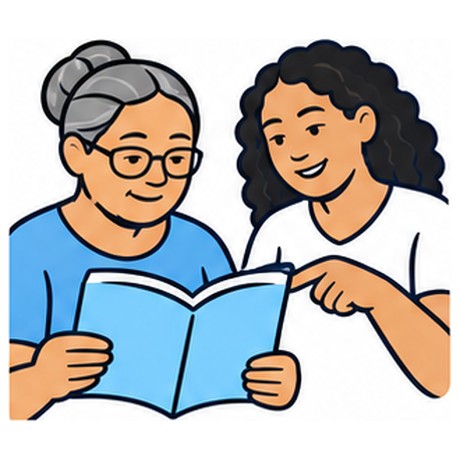
A plain guide for NDIS providers: what it is, who it helps, the rules it follows and how to check a draft.
Easy Read is a way of writing for people who find reading hard. It uses short sentences, everyday words and a picture beside each idea. It gives the main points of a document, not every detail.
Easy Read was made for people with intellectual disability. It also helps people with acquired brain injury, people with low literacy, and people who are still learning English.
It does not replace your full document. You keep both. The Easy Read version tells people the main ideas and where to find the rest.
The Australian Government Style Manual sets out this approach in full. Read the Style Manual page on Easy Read.
Plain English is clear writing for a general reader. Easy Read goes further. It cuts the content down to the main ideas, breaks every sentence into single ideas, and adds a picture to each one. A plain English document is usually still too hard for a person who needs Easy Read.
After those, look at anything a participant is asked to read, sign or follow: house rules, fee and cancellation rules, privacy and consent forms, and letters.
Read it beside your original. Check every date, fee, notice period, name and phone number. Then read it aloud. If a sentence makes you take a breath in the middle, it is too long.
The best check is to test it with the people who will use it. Specialist Easy Read services do this as part of their work.
Download the one-page checklist (PDF)
Plain Page makes Easy Read versions of NDIS provider documents for $290 a document, back in 3 business days. We write and draw with AI tools and check every fact against your original. We do not test with readers.